Comptes rendus d’un ours du petit cerveau
For a finite group G, let Irr(G) denote the set of irreducible characters of G (working over the complex field) and define AD(G) to be

This invariant of G first appeared in a 1994 paper of B.E. Johnson under a different guise. Johnson was studying the amenability properties (in the Banach algebraic sense) of Fourier algebras of compact groups, and he showed en route that for a finite group G, the amenability constant of its Fourier algebra coincides with AD(G).
From basic character theory, we know that AD(G)≥1, with equality if and only if φ(e)=1 for every φ in Irr(G), i.e. if and only if G is abelian. It is also observed in Johnson’s paper that if G is a non-abelian finite group, then AD(G)≥ 3/2. (See this earlier blogpost for a proof.)
For almost two years, on and off, I have been toying with — and occasionally obsessing over as displacement activity — the following problem.
Question 1. What are the possible values of AD(G) in the interval ![[\frac{3}{2}, 2]](https://s0.wp.com/latex.php?latex=%5B%5Cfrac%7B3%7D%7B2%7D%2C+2%5D&bg=ffffff&fg=333333&s=0&c=20201002)
The reason for the threshold 2 is that we can produce certain values easily: namely, by considering dihedral groups, whose irreducible characters all have degree 1 or 2, one can obtain the values 
So an answer to Question 1 would follow from a positive answer to the following question, which I asked on MathOverflow back in 2021:
Question 2. Suppose that AD(G)≤ 2. Does it follow that every irreducible character of G has degree ≤2?
The following result is not quite as strong as I had been hoping, but it does suffice to show that Question 2 has a positive answer.
Theorem 3.
Let G be a finite group and suppose it has an irreducible character of degree ≥3. Then
![\displaystyle {\rm AD}(G) \geq 2+ \frac{1}{\lvert[G,G]\rvert}](https://s0.wp.com/latex.php?latex=%5Cdisplaystyle+%7B%5Crm+AD%7D%28G%29+%5Cgeq+2%2B+%5Cfrac%7B1%7D%7B%5Clvert%5BG%2CG%5D%5Crvert%7D&bg=ffffff&fg=333333&s=0&c=20201002)
where [G,G] denotes the derived subgroup (a.k.a. the commutator subgroup) of G.
Corollary 4. Let G be a finite group, and suppose that AD(G)≤2. Then

The techniques used are surprisingly generic, in the sense that although the finiteness of G is used in an essential way to perform an infinite descent/minimal criminal argument, I don’t need Sylow’s theorems, nor any of the harder results concerning how the set of character degrees influences the structure of a finite group.
I have finally got around to writing up the details; hopefully a preprint will materialize in early 2024.
Some acknowledgments and room for improvement
I would like to thank Geoff Robinson for taking an interest in this problem back in 2021 and sharing some of his own thoughts/notes; even if the techniques that he showed me don’t really play a role in my eventual proof of the theorem, it is fair to say that some of the comments and ideas helped in developing my own attack on the problem.
Geoff conjectured that in fact, the lower bound in Theorem 2 could be improved to 9/4, which would be another gap result. But so far I am unable to even achieve a lower bound 2+δ for some small positive δ.
Pomegranate seeds
Persephone gets released for four months (or possibly six) months out of twelve; I get four months out of thirty-two. Well, let’s see what grows and what the harvest brings.
(On sabbatical leave, 2023-12-15 to 2024-04-15.)
Unexpected sugar found in porridge
Following a post-seminar chat with my colleague Paul Levy:
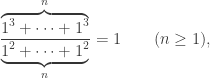
and

and

and

and

The church bells all were broken
A long, long time ago
I can still remember
How that music used to make me smile
Once upon a while, you lose your way
Hey hey
Two fingers for the dead
Two fingers for the living
Two fingers for the world that we all live in
30th July 1949 — 23rd June 2023.
Back through the wardrobe
Not Narnia, but Winnipeg; here for a week to do research, and remind myself of a former life, left behind but perhaps not yet completely a land of lost content.
Perhaps it’s not too late to to seek a newer world: push off, and sitting well in order smite the sounding furrows. A Shropshire Ulysses, if you will.
Message in a bottle
Just because the demands in current academia for sales-pitching and explanation-of-esteem-worthiness have (temporarily?) worn me down, am throwing this out there for whoever comes across it.
Theorem (yours truly, 18th May 2023). Let 




Then 
This theorem continues a tradition of infrequent results of various researchers showing that under certain extra conditions, amenable operator algebras are isomorphic to
Corollary. If a norm-closed subalgebra of the Toeplitz algebra is amenable, then it is isomorphic to the underlying Banach algebra of a
Main ingredients of the proof of the theorem
- The fact that norm-closed amenable subalgebras of
are isomorphic (as Banach algebras) to self-adjoint subalgebras of
- The fact that the quotient of an operator algebra (on Hilbert space) by a norm-closed ideal can be represented isomorphically as an operator algebra (on some other Hilbert space).
- The fact that norm-closed commutative amenable operator algebras are isomorphic as Banach algebras to
for some compact Hausdorff space
. This is a result of Marcoux and Popov (published in 2016).
- A small fragment of the “Busby correspondence” for extensions of Banach algebras. This is a special case of some general work by Busby (published in 1971).
- A “similarity/unitarizability” result for bounded homomorphisms from countable abelian groups into certain corona
Remark. Both assumptions 1 and 2 in the theorem are necessary.
Update 2023-05-22: fixed a typo in the definition of “essentially commutative”.
J’en ai marre
how can you say
I go about things the wrong way
houses as ruins and gardens as weeds
why do anything when you can forget everything
I was much further out than you thought, eh
Update 2023-04-16: a friend has responded with
At the third stroke
Further update 2022-12-06: after I wrote the first version of this post, I discovered an extra reference that I should have cited in the bibliography, and which would have made my life easier had I known about it before submitting! See the body of the post for further details.
An update: the paper “An explicit minorant for the amenability constant of the Fourier algebra”, which has been mentioned in previous posts on 2020-12-29 and 2021-12-29, has recently been accepted for publication in International Mathematical Resarch Notices IMRN (the redundancy in the name is not a typo).
The “author accepted manuscript”, as we must now call these things in the UK’s Procrustean REF-linked open access framework, can be found on the arXiv as 2012.14413. Since the abstract has been tweaked slightly compared to the submitted previous version, here is the updated abstract:
We show that if a locally compact group G is non-abelian then the amenability constant of its Fourier algebra is ≥ 3/2, extending a result of Johnson (JLMS, 1994) who proved that this holds for finite non-abelian groups. Our lower bound, which is known to be best possible, improves on results by previous authors and answers a question raised by Runde (PAMS, 2006).
To do this we study a minorant for the amenability constant, related to the anti-diagonal in G× G, which was implicitly used in Runde’s work but hitherto not studied in depth. Our main novelty is an explicit formula for this minorant when G is a countable virtually abelian group, in terms of the Plancherel measure for G. As further applications, we characterize those non-abelian groups where the minorant attains its minimal value, and present some examples to support the conjecture that the minorant always coincides with the amenability constant.
The accepted version benefited significantly from a detailed referee’s report, which suggested some technical improvements in the discussion of measurability issues, and also gave a sketch of the following result: if A and B are C*-algebras, and D denotes the completion of A ⊗ B in some C*-tensor norm, then the canonical map 
Update 2022-12-06: it turns out that the C*-algebraic result referred to above can be found in one of the appendices to Raeburn and Williams’s book on Morita Equivalence and Continuous-Trace C*-Algebras, which is not a book I own and not a source I would have thought to turn to. The arguments they use are essentially the same as the one I came up with in the appendix of my paper based on the referee’s sketch. However, since they develop various things from scratch to keep their account more self-contained, I decided to keep the appendix to my paper (which outsources a lot of standard details to Dixmier’s book) and merely add a note to acknowledge the Raeburn-Williams book.
In an earlier version of the paper (and in the 2021-12-29 blogpost) I mentioned the following question: if G is a finite group whose amenability constant is less than or equal to 2, do all its irreps have degree at most 2? It turned out, in between the submission and the acceptance, that the answer is yes, but I decided to leave that for a future paper (perhaps for future blog posts).
Divisibility testing
A minor bit of throwaway blogging, just as displacement activity.
For several years I have been joking with colleagues that given any 3 digit number I start trying to find its prime factorization, in case it can be used as the raw input for an exercise/exam question on the Number Theory course that I have been teaching at Lancaster.
Well, I was recently staying in a hotel room numbered 647, and I did indeed find myself thinking “hmm, I wonder if that’s prime, it smells like it should be prime”. It then struck me that this particular number is a useful illustration of some tricks that can be useful to speed up “testing for divsibility by primes less than 30”, which I am not sure I ever actually explained in class. None of this is original, and I am sure has been re-invented by generations of students who either didn’t have hand-held calculators or just enjoyed being able to play around with mental arithmetic. But it is an illustration of how “long division with remainder / the Euclidean algorithm” is often not the quickest way to do things for small numbers.
So: as usual we start by noting that 647 is odd (not divisible by 2) and its digit sum is 2 mod 3 (hence 647 itself is 2 mod 3). It is an odd number which doesn’t end in 5, so it is not divisible by 5.
What about divisibility by 7? Rather than doing long division, note that 647 is divisible by 7 if and only if 647-7=640 is. But since 7 is coprime to 10, it divides 640 if and only if it divides 64, and we rule this out by remembering that 64 is a power of 2.
Divisibility by 11 is the standard “alternating digit sum” test: 6-4+7 is not 0 mod 11, so 647 is not divisible by 11.
What about divisibility by 13? Again, rather than doing long division we try adding/subtracting multiples of 13 to 647 until we get a multiple of 10, then arguing as we did in the “divisibility by 7” case. Thus: 647+13 = 660 so 13 divides 647 if and only if it divides 66, and we know this isn’t the case since 66 =2 . 3. 11. Similarly for 17: since 647-17=630 and 17 doesn’t divide 63= 3^2 . 7, we see that 647 is not divisible by 17.
Recalling that 25^2 < 647 < 26^2 we see that it only remains to check divisibility by 19 or 23. Since 57 is a multiple of 19 and 647 – 57 = 590, 59-19 – 40, we see that 19 does not divide 647. Finally, since 647+23 =670 and 67 + 23 = 90, we see that 23 does not divide 647.
We conclude that 647 is indeed prime.
Having gone through all this, it strikes me that I never looked into the algorithmic (in)efficiency of the following approach to testing if a given N is divisibly by a given odd prime p. Namely, inductively define 

For N=647 and p = 7 this would have yielded the sequence 

 Since it is not ...